
Working in the Workshop
Drilling, milling, filing, welding and lathes.

I’m writing down some memories of my time in the Royal Navy. You can start at Chapter One if you like, or just keep reading here.

— 1982 —
After I joined the Navy, I spent most of my first year in the factory, learning to use factory tools.
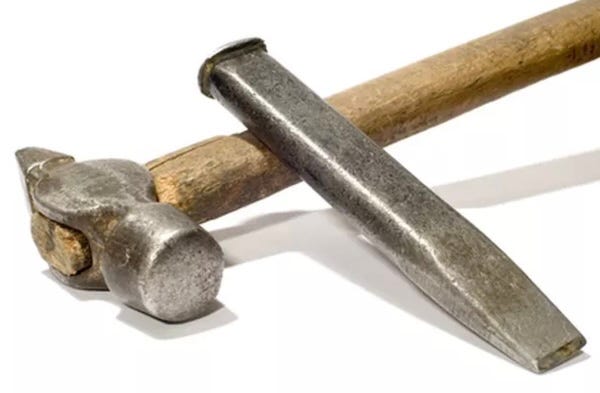
On the first day in the workshop, they gave us a big block of steel, a big steel hammer and a big steel chisel. We had to turn the big block of steel into a smaller block of steel, and we started banging away. We banged away for about a week, and I hit my hand with the hammer so many times that I was pouring blood.
Our spec was to make a cube, accurate to a tenth of an inch. Then they took away our hammer and gave us a file, and we filed the block of steel accurate to three thousandths of an inch. Then we drilled a hole and put another block in.
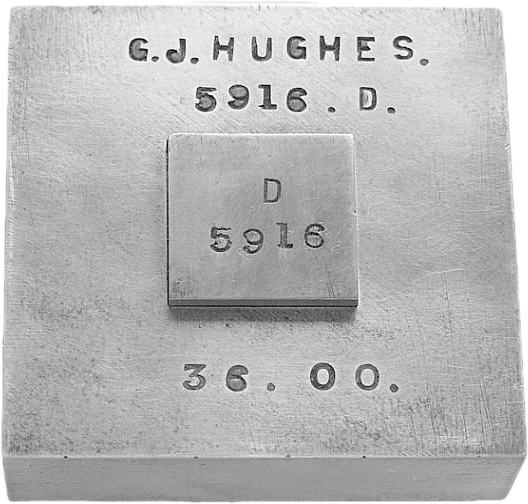
We made all kinds of widgets out of brass and steel, then switched to a lathe. I was useless at filing, but better with the lathe.
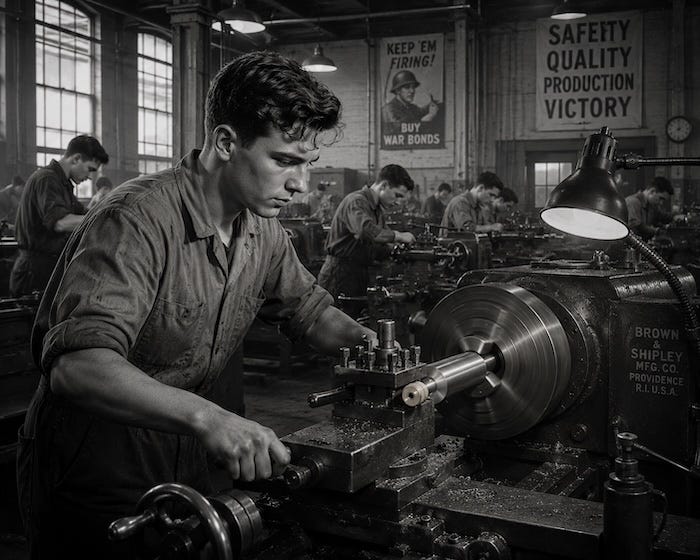
A lathe is a large, automated tool that spins at a thousand rpm. We used it to cut metal to make ever-more-complex cylinders of steel, brass and aluminium. Our final job was a big tube of steel with parts that slid or screwed onto it. Here’s Tony’s.
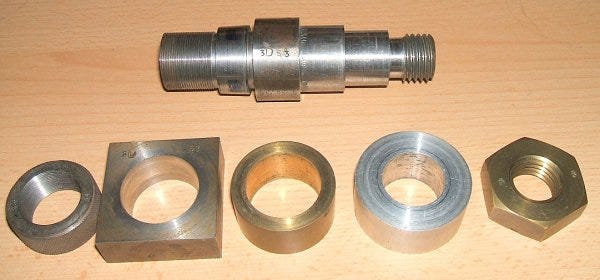
After filing, turning, drilling, forging, casting, milling, hardening, tempering and annealing, I learned to weld.
There are two techniques for welding. Arc welding uses an electrode that generates an electric arc so hot that it melts a steel plate. Gas welding is more fun — but tricky!
Gas welding uses a torch that burns acetylene at 1500°C to melt the plates. You melt your steel into a puddle, then melt a steel rod to feed into the puddle, like glue. You move the puddle along until you have joined your two plates together. If you go too fast, the puddle dries up, and everything gets stuck. If you go too slowly, the plates melt completely, and a big lump of steel falls out.
We made all kinds of boxes and shapes.
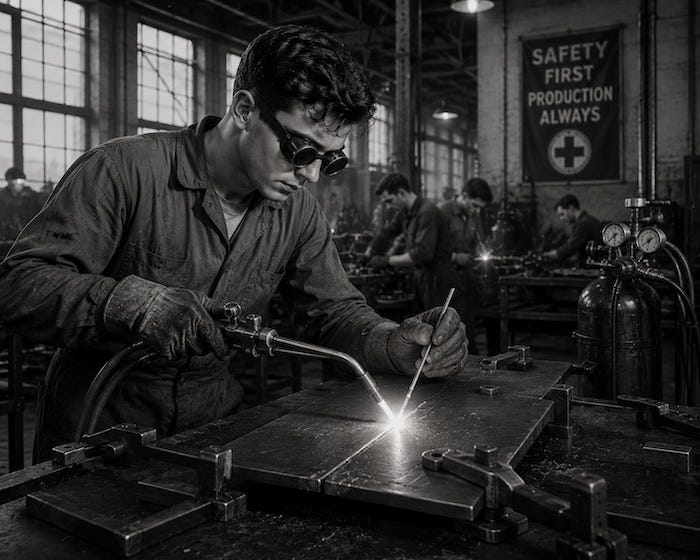
As you feed your job, your feeder rod gets shorter and shorter until you eventually need to grab a new one. After a while, you have a bunch of these short rods, and you weld them together to make a foot-long rod again. My friend Alf got lazy, though, and didn’t stop at a foot. Alf made a three-foot-long filler rod which he accidentally tucked behind his ear, burning off all his hair, with big burn blisters across his head.
Another time, we had a little spirit burner to light our welding torches, like something out of Aladdin. One day, when our instructor was away, I wondered what would happen if I filled the burner with acetylene. What happened is the burner exploded with a bang so loud that everyone in the workshop turned to glare at me, and the wick hit the roof of the factory. The instructor came running to see what had happened.
“What the hell was that!?”, asked the instructor.
“Oh, nothing”, I said as the burning wick gently floated down from the sky.
I wonder if they still leave 16-year-olds alone with acetylene and welding torches.
We got graded on everything we made in the factory. If you got over 80%, the Captain gave you a certificate. If you got under 40%, you had to repeat the class; two more failures, and they put you on the next train home. I got 79.5 in welding, but had many adventures along the way.
We worked in the factory every morning, in the classroom every afternoon, and then had P.E. twice a week. To get ready for our P.E. (physical education) inspection, we used half a can of starch until our t-shirts and shorts could stand on their own, ready for inspection. Then we’d run to the gym in our underpants, carrying our shorts so we wouldn’t crease them.
P.E. lessons were brutal but fun, with rope climbing and vaulting and other exercises to get us in shape. God help you if you couldn’t climb a rope — the P.E. instructors had big sticks to beat you with if you couldn’t.
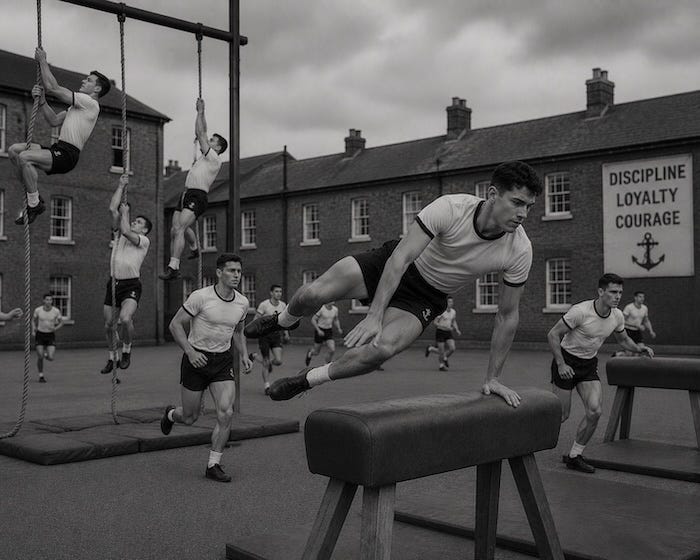
Everything was regimented.
In two movements…claim your… ROPE!
With the right hand on top…as high as you can reach…upwards and inwards… GRASP!
Two shifts… CLIMB!
On the right… make… FAST!
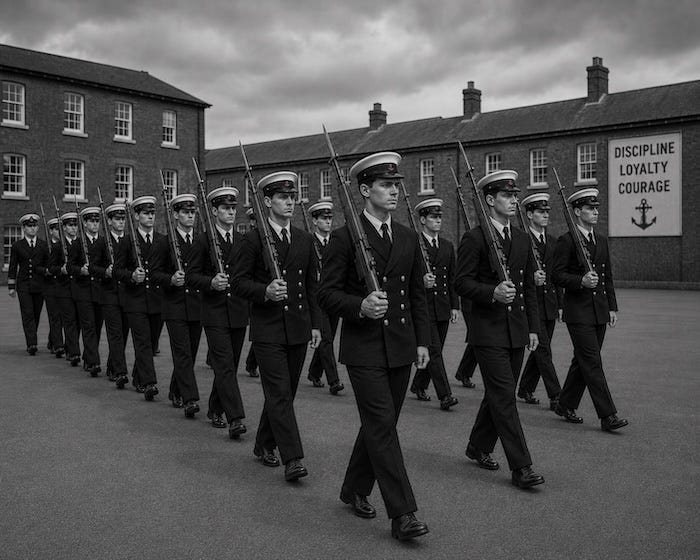
After all this climbing, and several miles of marching, and running several more, we were fit and ready to move on to a more specialised training establishment. The Sorting Hat made me a Weapon Engineer, and they sent me to HMS Collingwood in Hampshire.
I’ll tell you all about that soon, but there are a few more adventures at HMS Fisgard to share first.
I’m writing my life story here. Some Navy stories. Some backpacking around the world. Some Silicon Valley software.


Come take a look!